Luxating Patella in Dogs: Helping Your Best Friend Move Freely Again
Watching your dog struggle with skipping steps, limping, or showing signs of pain due to luxating patella can be upsetting. For many owners, the biggest worry is whether surgery is the only solution. At Butterwick Animal Rehab, we specialise in canine rehabilitation, offering tailored physiotherapy and hydrotherapy treatments to help improve mobility, reduce discomfort, and, in many cases, avoid or delay surgery altogether. For many owners, one of the biggest worries is whether surgery will be necessary—and it’s natural to feel overwhelmed.

"As seen on BBC Look North"
At Butterwick Animal Rehab, we specialise in canine rehabilitation to improve dog mobility and provide relief from the challenges of luxating patella. With tailored treatment plans that include physiotherapy, hydrotherapy, and non-invasive techniques, surgery isn’t always the only option. Our goal is to help your dog regain their confidence and mobility, so they can get back to doing what they love most.
- "I had 0 hope. This was our last option before surgery... After 12 weeks with the team, he hasn’t hopped, skipped, or gone lame in weeks. He’s so much happier and more confident." – Dion, owner of Oreo.
This page will guide you through what luxating patella is, the symptoms to watch for, and how our expert care can make a real difference for you and your dog.
What is Luxating Patella in Dogs?
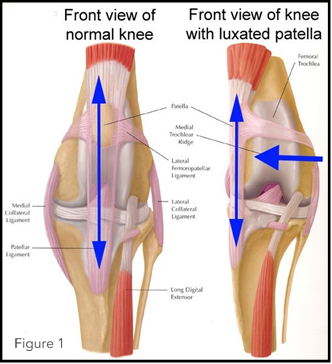
The term "luxating patella" refers to a condition where your dog’s kneecap (patella) slips out of its normal position in the groove of the thigh bone (femur). This can occur in one or both hind legs, leading to discomfort, reduced mobility, and, in some cases, long-term joint damage if left untreated.
Luxating patella is classified into four grades, which describe the severity of the condition:
Fun Fact: For grades 1-3, our rehab can often reduce the severity by one grade, helping your dog avoid surgery.
- "The team and I believe the grade 3 is now a grade 2 and the grade 2 is now a grade 1... Oreo is back in active assistance dog training!!!" – Dion, owner of Oreo.
Signs and Symptoms of Luxating Patella in Dogs
- Luxating patella symptoms can vary widely depending on the grade of the condition, but common signs include:
Skipping or Hopping Steps: Dogs may lift or skip steps with the affected leg as the kneecap temporarily slips out of position.
Intermittent Limping: Periods of limping or trouble bearing weight on the affected leg, especially after exercise, are often seen.
Difficulty Rising or Jumping: Dogs with more advanced cases may struggle to rise from lying down, climb stairs, or jump onto furniture.
Leg Stiffness: Stiffness in the hind legs, especially after periods of rest, may indicate the kneecap is slipping frequently.
Creaking or Clicking Sounds: Some dogs may produce clicking noises when they move, a sign that the kneecap is slipping out of and back into place.
Hunched or Altered Posture: Over time, your dog may adjust their posture to compensate for discomfort, which can strain other joints or muscles.
Did you know? Dogs with straighter leg structures are more prone to luxating patella due to the reduced stability of their knee joint.
- "Today Mylo has been discharged from physio as he no longer hops or limps and has shown dramatic improvement in his leg." – Dunc, owner of Mylo.
- "Eric ran across the fields for the first time in ages since his poorly leg... and there was no hopping or limping involved." – Rachel, owner of Eric.
Get a clear rehab plan today that works — friendly, no-jargon guidance that actually helps your dog
Easy to get to clinic, all the team are under one roof — no bouncing between clinics, no conflicting advice, and no repeating your dog’s story. IRVAP registered and results-focused.
- Joined-up care: physiotherapy + hydrotherapy working together as they should to maximise the best effect.
- Clear next steps: simple home plan and check-ins, Great Vet Physio and hydrotherapy.
- Friendly & honest: no jargon, no hard sell — just what’s best for you and your dog.
Treatment Options for Luxating Patella in Dogs
When it comes to luxating patella, early intervention and tailored treatment can make a significant difference in your dog’s mobility and overall quality of life. At Butterwick Animal Rehab, we specialise in non-invasive treatments designed to strengthen your dog’s muscles, reduce discomfort, and improve stability—often helping to avoid or delay surgery.


Conservative Management: Physiotherapy and Hydrotherapy
- For dogs with mild to moderate luxating patella (Grade 1 or 2), conservative treatment can be highly effective in managing the condition and preventing further progression.
- Physiotherapy: Strengthening the muscles around the knee, especially the quadriceps and hamstrings, helps stabilise the patella and improve your dog’s overall gait. Our tailored physiotherapy programmes focus on exercises that are easy to do at home, such as controlled sit-to-stand exercises or low-impact obstacle courses.
- Hydrotherapy: The buoyancy of water allows your dog to exercise without placing undue strain on their joints. In our underwater treadmill or hydrotherapy pool, your dog can safely rebuild muscle tone, improve joint flexibility, and regain confidence in their movements.
- "After weeks of physio and hydro... Mylo has been discharged as he no longer hops or limps. He even progressed from the treadmill to swimming, despite his fear of water." – Dunc, owner of Mylo.

When Surgery is Necessary for luxating patella
- For severe cases of luxating patella (Grade 3 or 4), surgical intervention may be required to correct the position of the kneecap and stabilise the joint. Surgery typically involves techniques like deepening the groove of the femur (trochleoplasty), tightening surrounding tissues, or repositioning the patellar ligament to restore alignment. While surgery is effective, recovery can take several months, and rehabilitation is crucial to ensure your dog regains full function. Our post-surgical programmes are designed to complement your vet’s surgical plan, focusing on muscle recovery, pain management, and confidence-building.
- "Our boy Kai had been struggling with luxating patella, and surgery wasn’t an option for us. With hydrotherapy at Butterwick, he has improved so much and can enjoy walks again." – Carole, owner of Kai.

A Tailored Plan for Every Dog
- At Butterwick Animal Rehab, we take a personalised approach to every dog we treat. During your first consultation, we’ll assess your dog’s condition, discuss their lifestyle and goals, and create a treatment plan tailored to their unique needs.
- Targeted Strengthening: Exercises to build muscle tone and stabilise the kneecap.
- Range of Motion Work: Techniques to improve flexibility and reduce stiffness in the knee.
- Pain Relief: Non-invasive therapies like laser therapy, massage, and pulsed magnetic field therapy (PMFT) to alleviate discomfort.
- Progress Monitoring: Regular assessments to track improvements and adjust the treatment plan as needed.
- "The staff at Butterwick took everything at Oreo’s pace, making sure he was comfortable and confident before starting sessions. They even made notes for me because they knew hydrotherapy made me unwell with my disability." – Dion, owner of Oreo.

Avoiding Surgery Through Rehabilitation
- For many owners, avoiding surgery is a top priority. Our conservative treatment plans focus on strengthening and stabilising the knee, often allowing dogs to return to a normal, active life without the need for invasive procedures.
- "Kai’s strength has improved so much with hydrotherapy that he no longer suffers daily, and surgery no longer seems necessary." – Carole, owner of Kai.
- "Whether your dog is recovering from surgery or you're exploring conservative options, physiotherapy and hydrotherapy are powerful tools for strengthening the knee, reducing pain, and restoring confidence. Let’s dive into how these therapies work."
Comparison of Treatment Options for Luxating Patella
| Aspect | Conservative Treatment (Physio/Hydro) | Surgical Treatment |
|---|---|---|
| Best for... | Mild to moderate luxating patella (Grades 1–2). | Severe cases (Grades 3–4). |
| Recovery Time | Gradual improvement over 6–12 weeks with consistent effort. | Post-surgical healing takes several months. |
| Cost | Lower cost; based on tailored session packages. | Higher cost, dependent on surgical complexity. |
| Invasiveness | Non-invasive, utilizing exercises, therapy, and hydrotherapy. | Requires anesthesia and a hospital stay. |
| Outcome | Improved stability, mobility, and reduced discomfort. | Corrects kneecap alignment, with rehab needed. |
The Role of Physiotherapy and Hydrotherapy in Treating Luxating Patella
Why Physiotherapy and Hydrotherapy Are Essential for Dogs with Luxating Patella
A diagnosis of luxating patella can be unsettling watching your dog limp, skip steps, or struggle to move comfortably is distressing. Many owners worry about the long-term impact on their dog’s mobility, happiness, and overall quality of life. The good news is that physiotherapy and hydrotherapy can offer a highly effective, non-invasive solution to improve your dog’s knee stability, muscle strength, and confidence in movement.
At Butterwick Animal Rehab, we specialise in helping dogs with luxating patella regain strength, reduce discomfort, and, in many cases, avoid or delay the need for surgery altogether. Whether your dog is newly diagnosed, recovering from surgery, or experiencing ongoing mobility issues, our expert team can develop a tailored rehabilitation plan to get them moving with ease again.
How Physiotherapy Can Help Dogs with Luxating Patella
At Butterwick Animal Rehab, we know every dog is unique, and so is their treatment plan. Whether your dog has mild luxating patella or is recovering from surgery, our rehabilitation team will design a plan that fits their needs, personality, and progress level.
What to Expect at Your Dog’s First Appointment
- Comprehensive Assessment: We’ll evaluate your dog’s movement, muscle strength, pain levels, and overall function.
- Bespoke Treatment Plan: We create a custom programme combining physiotherapy, hydrotherapy, and home exercises to achieve real results.
- Owner Involvement: We guide you through simple yet effective at-home exercises, so you can actively support your dog’s recovery.
Unlike many generic treatment plans, we take a step-by-step approach, ensuring your dog progresses at a comfortable pace. Our focus is on long-term improvements, not just short-term fixes.
- 👉 Example: Kai, a small-breed dog, came to Butterwick suffering from luxating patella that made daily walks painful. His owner wanted to avoid surgery, so we designed a structured physiotherapy and hydrotherapy plan. Over time, Kai rebuilt his strength, and his condition improved so much that surgery was no longer needed. "Kai enjoys his walks again, and I no longer worry about him being in pain!"
Addressing Common Owner Concerns About Therapy
Many owners wonder, “Will my dog tolerate therapy?” or “What if my dog is scared of water?” These are valid concerns, and at Butterwick, we make sure every dog feels safe, comfortable, and confident during their treatment.
✅ We move at your dog’s pace – We take time to build trust before starting any exercises.
✅ Our staff are trained in canine behaviour – If your dog is anxious, we use positive reinforcement to help them feel secure.
✅ We focus on stress-free treatment – Sessions are calm, controlled, and tailored to suit your dog’s personality.
If you’re considering physiotherapy or hydrotherapy for your dog’s luxating patella, we’d love to chat about how we can help. Get in touch today to book an assessment and take the first step towards restoring your dog’s mobility.
Speak to a Human Today
Worried about your dog? Call us now and we’ll answer your questions, explain your options, and help you take the next step for your dog’s quality of life.
No question too small—our team has helped thousands of dogs move from ‘Eeyore to Tigger’.
Get in Touch Online
We know you want the best of the best for your dog, and we also know you're a busy person. If you want to get your dog back to being happier, healthier and doing what you both love and want to get booked in - click on the link below and fill out the short form and we will get back to you shortly about making a difference to your dog's pain and mobility.
Give Your Dog the Best Chance at a Full Recovery—Book a Consultation Today
Imagine seeing your dog run across the park without skipping or limping, play with their favourite toy without hesitation, and climb onto the sofa for a cuddle—just like they used to.
For many owners, luxating patella feels like a lifelong limitation, but it doesn’t have to be. With the right treatment plan, your dog can regain strength, confidence, and freedom of movement—just like Oreo, Mylo, Kai, and so many others who have walked through our doors.
- "When we first met Oreo, he was constantly skipping steps, going lame, and losing muscle in his back legs. His owner feared he’d need surgery. After 12 weeks of hydrotherapy and physiotherapy, Oreo hasn’t skipped or gone lame in weeks—he’s back to running, playing, and even continuing his assistance dog training!"
- You don’t have to navigate this journey alone—we’re here to guide you every step of the way.
Why Choose Butterwick Animal Rehab?
- (Helping Your Dog Move Freely Again—With Trusted Experts Who Care.)
You’re Not Alone—We’re Here to Help
- We understand the overwhelming stress of seeing your dog struggle with luxating patella. The uncertainty of “Will they ever walk normally again?”, “Can I avoid surgery?”, or “Am I doing enough for them?” can be exhausting.
- At Butterwick Animal Rehab, we don’t just offer rehabilitation—we offer hope with real world results. We’ve helped hundreds of dogs regain their mobility, strength, and confidence, and we’d love to do the same for yours.
Our Experience & Expertise Make a Difference
- Specialist Canine Rehabilitation Team – Our veterinary physiotherapists and hydrotherapists are experts in rehabilitating dogs with luxating patella, helping them regain muscle strength, stability, and mobility.
- Tailored Treatment Plans – No “one-size-fits-all” approach here. We customise every programme based on your dog’s specific condition, comfort levels, and progress.
- A Proven Track Record – Our clients consistently see improvements in their dogs, even when other treatments have failed.
- 📢 Don’t just take our word for it… Here’s what dog owners like you are saying:
Trusted by Experts & Thousands of Dog Owners
- 🏆 Featured on BBC Look North – Twice!
- 🎓 Ex-Chairman of the Canine Hydrotherapy Association
- 🎯 Chair of the Hydrotherapy Sub-Group of [Regulatory Body Name]
- 🐶 Trusted by thousands of local dog owners who put their pets’ recovery in our hands
- Butterwick is the leading canine rehabilitation clinic in the region, providing expert physiotherapy and hydrotherapy care. Our evidence-based, personalised approach helps dogs recover faster and enjoy life again—without unnecessary surgery.
Trusted by Experts & Thousands of Dog Owners
- 🐶 “After weeks of physio/hydro and exercises at home, today Mylo has been discharged from physio as he no longer hops or limps and has shown dramatic improvement in his leg. We couldn’t have done this without Butterwick, and I feel so much more confident with Mylo’s condition now.” — Dunc
- 🐶 “We started hydrotherapy because we didn’t want Kai to go through surgery, and since starting, he has improved so much—he doesn’t suffer on a daily basis anymore and now enjoys his walks again. The team treated us like family.” — Carole
- 🐶 “This was our last option before surgery… and I had zero hope. But after 12 weeks, Oreo hasn’t hopped, skipped, or gone lame in weeks. He’s back in active assistance dog training! You’ve changed our lives, given us hope, and most of all, made our boy confident, strong & happy again.” — Dion
founder of Butterwick animal rehab

A Stress-Free, Positive Experience for Your Dog
We understand that dogs need to feel comfortable to get the best results from therapy. That’s why we create an enjoyable, relaxed environment where dogs can build trust, gain confidence, and progress at their own pace.
🐾 Calm & Safe Approach – We take the time to get to know your dog, ensuring they feel comfortable before treatment begins.
🐾 A Team That Cares – From the moment you walk through our doors, you’ll be greeted by warm, friendly expertswho treat your dog like one of their own.
🐾 Gentle, Positive Reinforcement – Whether it’s treats, toys, or just plenty of encouragement, we make sure every session is a rewarding experience.
Ready to See Your Dog Thrive Again?
Luxating patella doesn’t have to mean a lifetime of discomfort. With the right care, your dog can regain strength, stability, and confidence.
Start your dog’s recovery today with a personalised consultation.
Limited Spaces Available – Book now to secure your appointment and take the first step towards a happier, healthier dog.
"Hydrotherapy can be a game-changer for dogs with joint conditions like luxating patella, as the buoyancy of water supports movement without putting stress on the knee.”
“Alongside physiotherapy, we also offer laser therapy to help with inflammation and pain management.”
“Like Oreo, many dogs have avoided surgery thanks to a structured rehab plan tailored to their specific needs.”
“We’ve helped thousands of dogs regain their mobility, whether through physiotherapy, hydrotherapy, or post-surgical rehab.”
Frequently Asked Questions
About Luxating Patella in Dogs
Yes, if left untreated, luxating patella can worsen over time. Mild cases may only cause occasional limping, but more severe cases can lead to chronic pain, arthritis, and difficulty walking. Early intervention—whether through physiotherapy, hydrotherapy, or surgery when necessary—can help slow progression and improve mobility.
This depends on the severity (graded 1-4). Grades 1 and 2 often improve significantly with physiotherapy and hydrotherapy, helping dogs regain strength and prevent worsening. Grades 3 and 4 may require surgery if the condition severely affects daily movement or quality of life. At Butterwick, we assess your dog thoroughly and help you make the right decision based on their specific case.
Many owners start seeing noticeable improvements in strength and movement within 3-6 weeks. Each dog responds differently, but consistent sessions, combined with home exercises, can speed up recovery and help prevent future relapses.
Absolutely! With the right rehab plan, most dogs can return to normal activities, including walking and even running. It’s about building strength in the surrounding muscles to stabilise the knee joint and prevent slipping. We work with owners to create a structured exercise plan that keeps your dog active without overloading the joint.
Many pet insurance providers cover rehabilitation therapy, especially when recommended by a vet. We advise checking with your provider and can provide supporting documentation if needed. Our team is happy to guide you through the process.
During a session, we assess movement, muscle strength, and joint stability, then use a mix of manual therapies, laser therapy, and structured exercises to improve mobility. For hydrotherapy, your dog may use the underwater treadmill or pool, depending on their confidence and needs. Sessions are gentle, tailored, and always stress-free.
Recovery times vary based on the severity of the condition and the treatment approach. Conservative management can take weeks to months, while post-surgical recovery may involve weeks to a few months of rehabilitation. At Butterwick, our expertise in physiotherapy and hydrotherapy accelerates healing by focusing on gentle, progressive exercises that rebuild strength and mobility without causing further stress to your dog’s spine.
At home, follow your vet’s recommendations for rest and pain management. You can also work closely with Butterwick to support your dog’s recovery. We’ll teach you simple, effective exercises and provide advice on creating a safe environment for your dog, such as using ramps and supportive bedding. Our guidance empowers you to play an active role in your dog’s healing journey.
Conditions We Treat
At Butterwick Animal Rehab Clinic, we specialise in helping dogs with:
- Cruciate Ligament Injuries (e.g. CCL tears, TPLO recovery)
- Osteoarthritis in Dogs
- Canine Hip Dysplasia
- Intervertebral Disc Disease (IVDD)
- Luxating Patella
- Elbow Dysplasia
Not sure if your dog qualifies? Get in touch for expert advice or a free discovery visit.