Cruciate Ligament Injuries in Dogs: How to Improve Mobility & Reduce Pain
We help people who are worried about their dog’s health and want their dog to lead a more active, normal and pain free life!

Cruciate Ligament Recovery and Rehabilitation
— Dougal’s Family
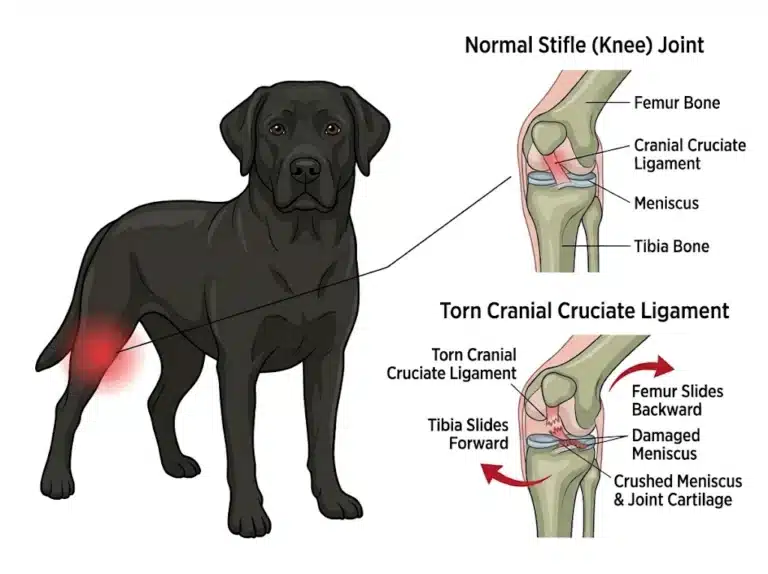
Understanding Cruciate ligament injury in dogs
Signs & Symptoms of Cruciate Ligament Injury
Dogs are masters at hiding discomfort, so a cruciate ligament injury does not always start with a dramatic yelp. Often, it begins with subtle changes in how your dog moves, rests, or interacts with the family leaving you with that nagging feeling that something is not quite right.
Depending on your dog’s breed and whether the ligament is partially strained or fully torn, signs can range from a slight stiffness to holding the leg completely off the ground. Look out for:
Limping or lameness in a back leg: This is often worse right after resting, first thing in the morning, or following a walk or play session.
Stiffness when getting up or sitting down: You might notice your dog sitting slightly to one side (often called a “lazy sit”) rather than tucking their knee neatly underneath them.
Skipping or “hopping” on one leg: Some dogs will briefly hold a back leg up for a step or two while trotting, then carry on as normal.
Swelling, thickness, or warmth around the knee: Feeling gently around the inside of the knee joint may reveal puffiness compared to their other leg.
Subtle changes in mood and everyday habits: Because dogs rarely cry out with chronic joint pain, they often show it by hanging back on walks, hesitating before jumping onto the sofa or into the car, or becoming quieter and less playful at home.
If you are spotting any of these signs and feel unsure whether to rest them or book a vet visit, trust your instincts. Getting your dog checked early prevents the knee from becoming more painful and protects their other back leg from taking on too much extra strain.

Why Do Cruciate Ligament Injuries Happen?
When your dog suddenly injures a cruciate ligament, it is completely natural to replay that walk or game of fetch in your head and blame yourself. In reality, cruciate injuries in dogs are rarely caused by one single unlucky moment on its own.Instead, they usually develop from a combination of gradual wear and tear inside the joint, natural anatomy, and everyday movement:
Gradual weakening over time (cruciate ligament disease): Unlike human athletes who usually snap a healthy ligament in a sudden sports collision, most dogs experience a slow, progressive fraying of the ligament fibres over months or even years. Because the ligament is already weakened, an ordinary turn in the garden or step off the sofa can be the final straw.
Sudden twists, turns, and stops during play: Chasing after a ball or toy, braking sharply, and twisting at speed puts huge rotational force through the knee joint. When a ligament is already under strain, that sudden pivot is often the moment it gives way.
Breed, build, and joint angles: Certain breeds, including Labradors, Golden Retrievers, Rottweilers, Boxers, West Highland White Terriers, and Staffordshire Bull Terriers, are naturally more prone due to the natural slope of their shin bone and knee alignment, which places higher everyday tension on the cranial cruciate ligament.
Age, body weight, and muscle conditioning: Carrying even a little extra weight increases the load passing through the knee with every step, while weaker hindlimb and core muscles leave the joint with less natural support.
Extra strain from an injury on the opposite leg: When one back leg is sore, dogs automatically shift their weight onto their stronger side. Without targeted rehabilitation to build strength and balance across both hind legs, the opposite cruciate ligament is placed under heavy extra strain.
Understanding why this happens takes away the guesswork and guilt, and shows why strengthening the muscles around the knee through tailored physiotherapy and hydrotherapy is so effective for protecting your dog long term.
Treatment options for Cruciate ligament injury
When your dog is diagnosed with a cruciate ligament injury, it is completely natural to feel overwhelmed and wonder about the best treatment path. Whether your veterinary surgeon recommends conservative management or surgery, we are here to support you and your dog at every stage.
Conservative and Non Surgical Rehabilitation
For many dogs, particularly smaller breeds, older companions, or those with partial tears, structured conservative management can be highly effective. Working alongside your vet's pain relief plan and guidance from bodies such as RCVS Knowledge, our hydrotherapy and physiotherapy programmes help to:
- Build surrounding hind limb muscle strength safely without stressing the joint
- Reduce pain, swelling, and joint inflammation naturally
- Improve stifle flexibility, balance, and everyday comfort
- Manage early osteoarthritis and slow further joint wear
This approach can help many dogs regain comfortable mobility without surgery, or build vital strength beforehand if an operation becomes necessary.
Surgical Intervention
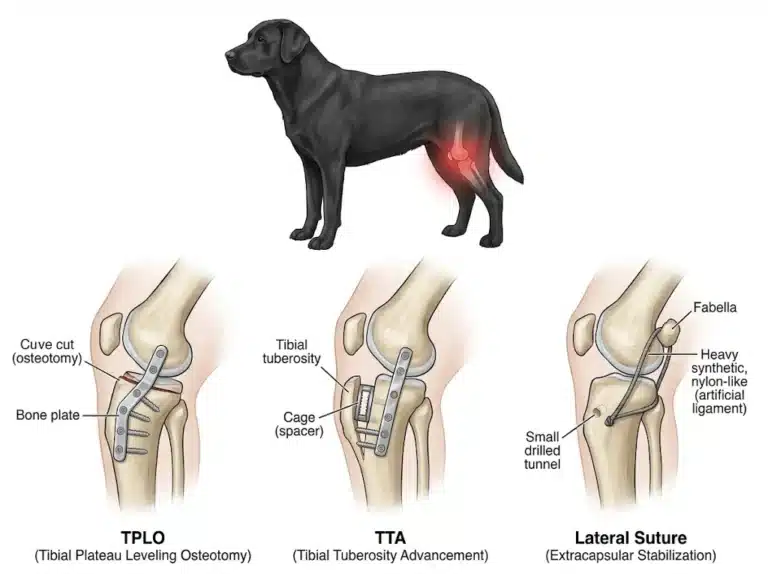
When your veterinary surgeon recommends surgery to stabilise your dog's knee, they will select the procedure best suited to your dog's size, age, bone shape, and activity level. As outlined by the American College of Veterinary Surgeons, every operation shares the same goal: stopping the painful forward slide of the shinbone so your dog can bear weight comfortably again.
- TPLO (Tibial Plateau Levelling Osteotomy): Most commonly recommended for medium, large, and active dogs, this procedure changes the mechanics of the knee rather than replacing the torn ligament. Your surgeon makes a precision curved cut at the top of the shinbone, rotates it to flatten the natural slope, and secures it with a custom metal bone plate and screws so the joint stays stable under weight.
- TTA (Tibial Tuberosity Advancement): Also designed to alter the forces acting on the knee, this surgery advances the front section of the shinbone forward and holds it in place with a small titanium cage spacer and plate. Adjusting that angle changes the pull of the patellar tendon so it neutralises the forward thrust of the shinbone during movement.
- Lateral Suture (Extracapsular Stabilisation): Often chosen for smaller or lighter dogs, this technique places a strong, heavy duty synthetic line outside the joint capsule to mimic the job of the torn ligament. Over the following months, your dog's own body builds natural fibrous tissue around the joint to provide lasting stability.
Why Post Operative Rehabilitation Matters
Surgery repairs the mechanical stability of the knee, while structured rehabilitation restores the strength, confidence, and movement around it. Starting gentle, vet approved therapy at the right stage makes a significant difference to your dog's long term comfort and mobility.
Following your surgeon's clearance, our tailored post operative programmes are designed to:
- Support tissue healing and ease pain and swelling after surgery
- Gradually rebuild wasted hind limb muscle, flexibility, and core balance
- Prevent compensatory strain on the opposite hind leg and lower back
- Help your dog regain confidence and return to walks and play safely
"Beano had surgery but still needed rehab. Butterwick's care got him back to walking and playing happily."
Beano's Family
We stay in close communication with your referring veterinary surgeon throughout your dog's recovery, ensuring every exercise and hydrotherapy session matches their healing stage. Our goal is always the same: helping your dog get back to doing what they love, safely and comfortably.
Protecting Your Dog's Other Back Leg
One of the most important things to understand about cranial cruciate ligament disease is that it is rarely an isolated problem in just one knee. Research consistently shows that roughly 40% to 60% of dogs who rupture one cranial cruciate ligament go on to injure the opposite knee within 12 to 18 months.
When one back leg is painful, your dog naturally shifts their body weight onto their stronger hind leg a bit like we do if we get a stone in our shoe. Over time, that extra load places heavy strain on the opposite ligament. Starting structured physiotherapy and hydrotherapy early builds even muscle strength, core stability, and balanced weight bearing across both hind limbs, significantly reducing the risk of a second injury.
How We Work Alongside Your Veterinary Surgeon
Leaving the vet clinic with a cruciate ligament diagnosis can feel overwhelming, especially when you are trying to take in a lot of medical information at once and figure out what the next few weeks will look like for your dog. At Butterwick Animal Rehab Clinic in Darlington, we give you the time and space to talk things through calmly, ask every question on your mind, and understand how rehabilitation fits around your dog and your daily routine.
We work closely alongside your veterinary surgeon so your dog gets seamless, joined up care from day one:
Space to talk through your options: Whether your vet has recommended surgery or a conservative recovery plan,we explain what each stage of rehabilitation involves in plain English so you feel confident and supported at every step.
We handle the veterinary referral for you: By law, veterinary physiotherapy and hydrotherapy require veterinary consent. Once you contact us, we reach out directly to your vet for your dog’s medical history and sign off so you do not have to chase paperwork yourself.
Clear communication throughout recovery: We send regular progress updates back to your referring vet,ensuring your dog’s exercise plan, pain management, and healing stay safely aligned.
Get a clear rehab plan today that works — friendly, no-jargon guidance that actually helps your dog
Easy to get to clinic, all the team are under one roof — no bouncing between clinics, no conflicting advice, and no repeating your dog’s story. IRVAP-registered and results-focused.
- Joined-up care: physiotherapy + hydrotherapy working together as they should to maximise the best effect.
- Clear next steps: simple home plan and check-ins, Great Vet Physio and hydrotherapy.
- Friendly & honest: no jargon, no hard sell — just what’s best for you and your dog.
Why Hydrotherapy & Physiotherapy Are Essential for CCL Recovery
At Butterwick Animal Rehab Clinic in Darlington, we’re proud to be a physiotherapy-led clinic meaning your dog receives expert, hands-on care and tailored canine cruciate ligament injury treatment from highly qualified professionals. Over the past 20 years, we’ve helped more than 9,000 dogs from across the North East regain their strength, mobility, and joy.
How does Hydrotherapy help cruciate injuries?
- The water supports your dog’s weight, easing pressure on the knee joint.
- Moving against the water’s resistance helps strengthen muscles safely.
- Warm water relaxes muscles and improves circulation, reducing pain and stiffness.
— Ivy’s Owner
How does Physiotherapy help Cruciate ligament injuries?
— Max’s Owner
- Massage to relax tight muscles
- Specialised stretching and movement exercises
- Myofascial release (gentle technique to ease muscle tension)
- Home exercise programmes

LASER Therapy for cruciate ligament injuries
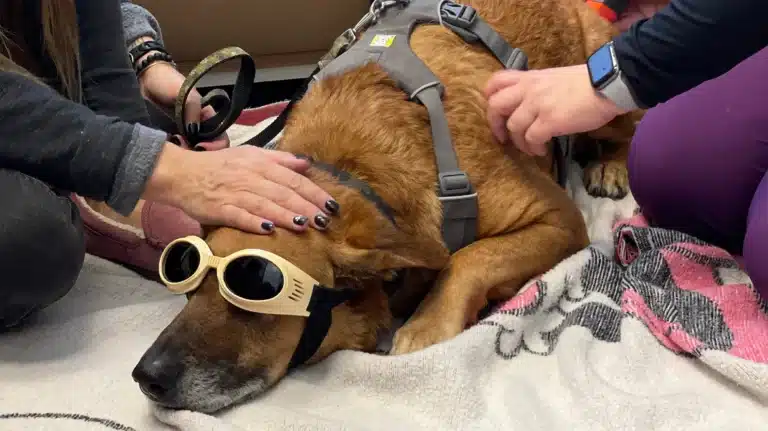
Our Veterinary Physiotherapists also offer LASER therapy for your cherished furry friend. This treatment uses light at different frequencies, wavelengths, and powers to optimise the body’s natural healing process. The light energy passes through the skin into the cells, initiating photobiostimulation (similar to photosynthesis in plants). This therapy not only enhances the body’s regeneration process but also encourages the release of endorphins and collagen, improves blood circulation, and consequently increases mobility while reducing pain and swelling.
Pulse Magnetic Therapy for cruciate ligament injuries
This therapy uses pulsed electromagnetic fields at different frequencies, which restore the damaged cells to their ‘healthy’ electrical charge. This process optimises normal cellular functions, improving the healing rate of bones, nerves, and soft tissues such as ligaments, tendons, muscles, and skin, while also providing pain relief.

Why Choose a Physiotherapy-Led Approach?
- Builds strength and stability around the knee
- Reduces pain and swelling naturally
- Improves your dog’s range of motion and coordination
- Helps manage arthritis and prevent future injuries
— Bella’s Owner
What Does a Typical Rehab Program Look Like?
- A detailed initial assessment by our expert team
- Hydrotherapy sessions in our heated pool or treadmill
- Physiotherapy treatments combining hands-on care and therapeutic techniques
- A tailored home exercise program to support ongoing progress
- Regular reviews to adjust the plan as your dog improves
Speak to a Human Today
Worried about your dog? Call us now and we’ll answer your questions, explain your options, and help you take the next step for your dog’s quality of life.
No question too small—our team has helped thousands of dogs move from ‘Eeyore to Tigger’.
Get in Touch Online
We know you want the best of the best for your dog, and we also know you're a busy person. If you want to get your dog back to being happier, healthier and doing what you both love and want to get booked in - click on the link below and fill out the short form and we will get back to you shortly about making a difference to your dog's pain and mobility.

About Your Clinical Lead: Mark Harding
Mark is the founder and Clinical Director of Butterwick Animal Rehab Clinic in Darlington, bringing over two decades of experience in canine rehabilitation. As an IRVAP registered veterinary physiotherapist and former Chair of the Canine Hydrotherapy Association, he works closely with local veterinary surgeons across County Durham and North Yorkshire to guide dogs safely back to full mobility.
Meet Mark and the full Darlington rehabilitation team →